|
|
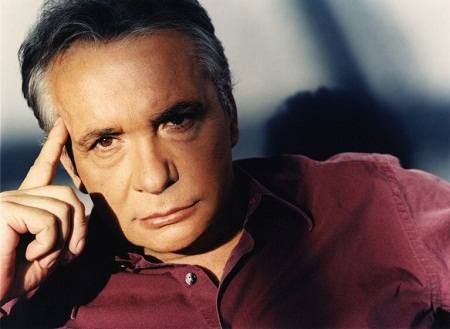
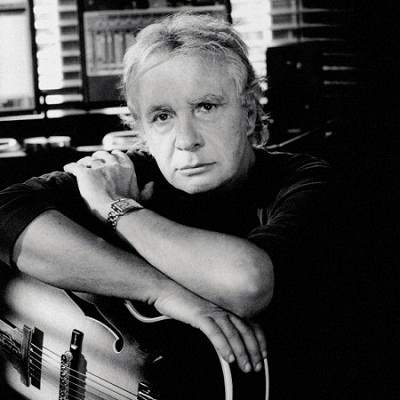
Michel Sardou Eurochannel offers you a retrospective of the singer with live performances of his concerts in Paris. You will listen to La Maladie d’Amour, Je vais t’aimer, Comme d’habitude or Le Chanteur de Jazz. In our special Michel Sardou, you will also discover his last song “Être une femme” and an interview with the singer. Biography: True star of the French music since the '70s, Michel Sardou has released 23 albums and 300 songs. He has sold over 320 million records. His most famous songs are “La Maladie d'amour” and “Les Lacs du Connemara.” In France, Michel Sardou has continued to create controversy throughout his career. It all began in 1967. The United States was in the middle of the Vietnam War. Following the departure of France from NATO, the relations between the two countries froze. France experienced an anti-Americanism wave. Michel Sardou chose that time to openly proclaim his support and love to the United States with his song “Les Ricains” (the Yankees). He felt that without the help of the U.S., France would all be German: "You would all be in Germany / To speak about I do not know what / To welcome whomever." His reference to the German occupation period, still recent in 1967, created a controversy. The song “Les Ricains” irritated France. General Charles de Gaulle, President of the French Republic, formally advised radio to not broadcast the song. The radios were all controlled by the state. Michel Sardou was to be immediately censored from the air. Either way, he managed a conspicuous entrance. In the 1970s, he showed his stance against the feminist movement in his song Villes de Solitude: “I want to rape women / To force them to admire me / Want to drink all their tears / And go up in smoke." With the song “Le Temps des Colonies”, he created controversy once again. He was accused of representing colonial France as a great period for the colonies. The most sensational controversy came in 1976 with the song “Je suis pour” (I am for). He took an official position on the death penalty which had been abolished a few years ago in France. Then, the entire French press turned against him. He was now considered a populist and conservative singer. Michel Sardou always denied any ideological or political connotations in his songs: “To me, they were only songs. No professions of faith or politics.” Michel Sardou had a tumultuous private life. He was married three times. Since 1998, he has been married to the former editor-in-chief of Elle magazine, Anne-Marie Perier. The biggest tragedy of his life was the 1999 gang rape of his youngest daughter Cynthia: "It's very difficult to have a child with all she has suffered and what she saw. The depression that followed, the damage that ensued, the treatment she received that was heavy, I was not able to handle this. I'm very clumsy.” His relationship with his daughter will be forever changed by this tragedy. In her book Appelez-moi Li Lou, Cynthia Sardou publicly criticized her father's absence after the tragedy. He dealt more with his career than with his family. The two of them no longer speak to each other. Despite the drama and controversies, Michel Sardou has always had popular success in France. He is now part of the French music heritage with Charles Aznavour, Johnny Halliday and Mireille Mathieu. |