|
|
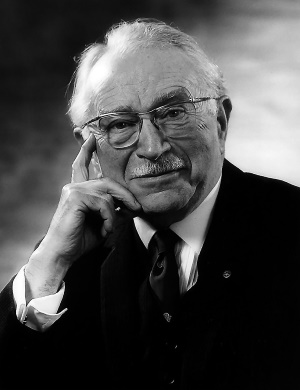
The Spirit Behind The Best of Men Who would ever thought that a German man would be saving the lives of wounded British soldiers during the peak of WWII? As surprising as that thought is the life of Dr Ludwig Guttmann, one of the heroes away from the trenches, who changed history forever with his unique style and caring dedication to his patients. He did not only save the lives of many hopeless combatants but also became the man who established the Paralympic Games in England. Born in Tost, within Upper Silesia, Germany (now Toszek, Poland) on 3 July 1899, Ludwig’s family moved when he was three years old to the Silesia city of Königshütte. During his humble beginnings, he never thought he would become the legend he is now. Guttman started practicing medicine as a volunteer in 1917 at the Accident Hospital in Königshutte and a year later decided to start his medical studies in April 1918 at the University of Breslau. He transferred to the University of Freiburg in 1919 and received his Doctorate in Medicine in 1924. By the 1930s Guttman was a renowned neurologist in Germany but his career suffered under severe anti-Semitic laws which banned him from treating patients from other religions. He fled Germany in 1939 and arrived with his wife and two young children speaking no English. Ludwig was given a research job at Oxford and in 1944, the opportunity came to be a Physician at Stoke Mandeville. In a few years, he transformed the treatment of paraplegics in the UK. His magic potion was sports and a strong dose of courage. |
|
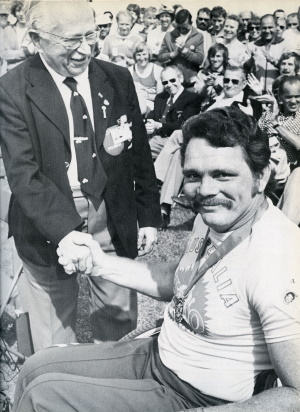
In a few months after his appointment, the Spinal Unit he directed became a place of miracles, hope and determination. A WWI veteran, who had been lying flat on his back for 26 years, came to the Unit to try one of their new wheelchairs and within six months he left able to walk with the aid of just a stick. But probably his most important achievement was the establishment of the Paralympic Games. He organized the first Stoke Mandeville Games for disabled war veterans, which was held at the hospital in July 1948, the same month as the opening of the London Olympics. All participants had spinal cord injuries and competed in wheelchairs. To encourage his patients to take part in national events, Guttmann used the term Paraplegic Games. These came to be known as the "Paralympic Games". By 1952, more than 130 international competitors had entered the Stoke Mandeville Games. Guttmann’s vision of an international competition as the equivalent of the Olympic Games themselves became a reality in 1960 when the International Stoke Mandeville Games were held alongside the official 1960 Summer Olympics in Rome. |
|
|